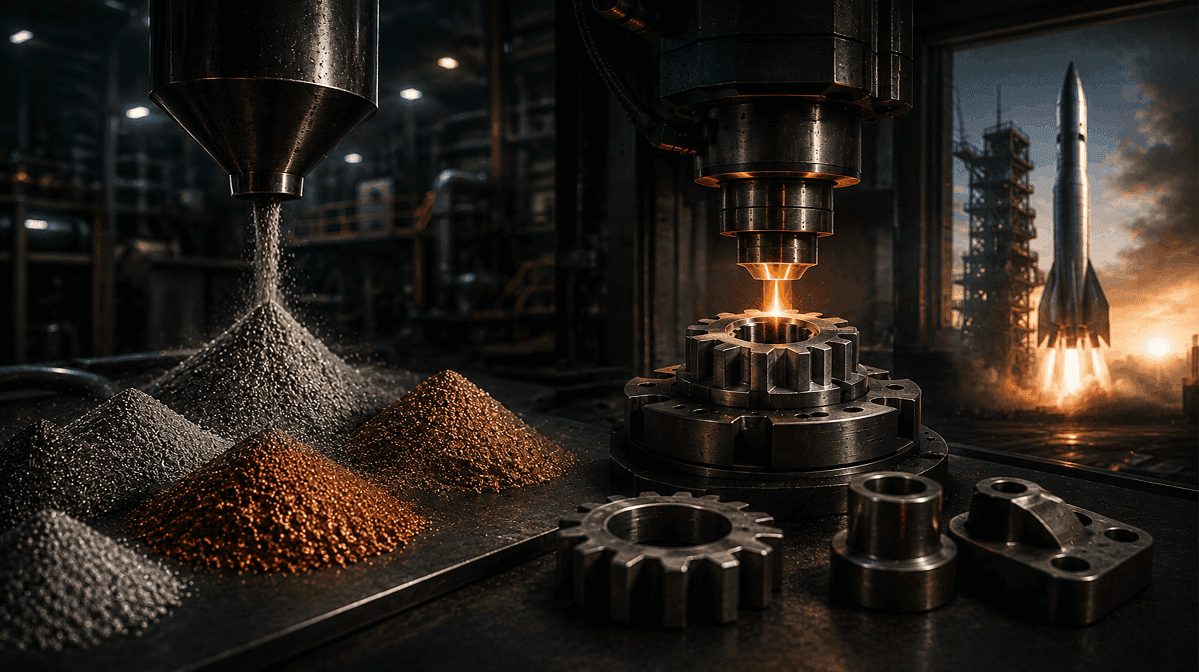
The Proof Is in the Powder: KPMC, MODAFL's aluminum powder contractor, deceives its global customers and suppliers
Jun 2026WikiIran's Exclusive
WikIran exposes KPMC, an Iranian aluminum powder manufacturer serving as MODAFL's go-to supplier for ballistic missile solid-fuel, while misleading international customers into believing it operates a legitimate commercial business, exposing both buyers and sellers to regulatory actions and sanctions.
Khorasan Powder Metallurgy Engineering and Designing Company (KPMC) was established in the early 1990s by engineer Hossein Zabol Abbasi in the Khorasan region of Iran. What began as a modest powder metallurgy venture has evolved into a multifaceted powder producer with over 30 years of industry experience.
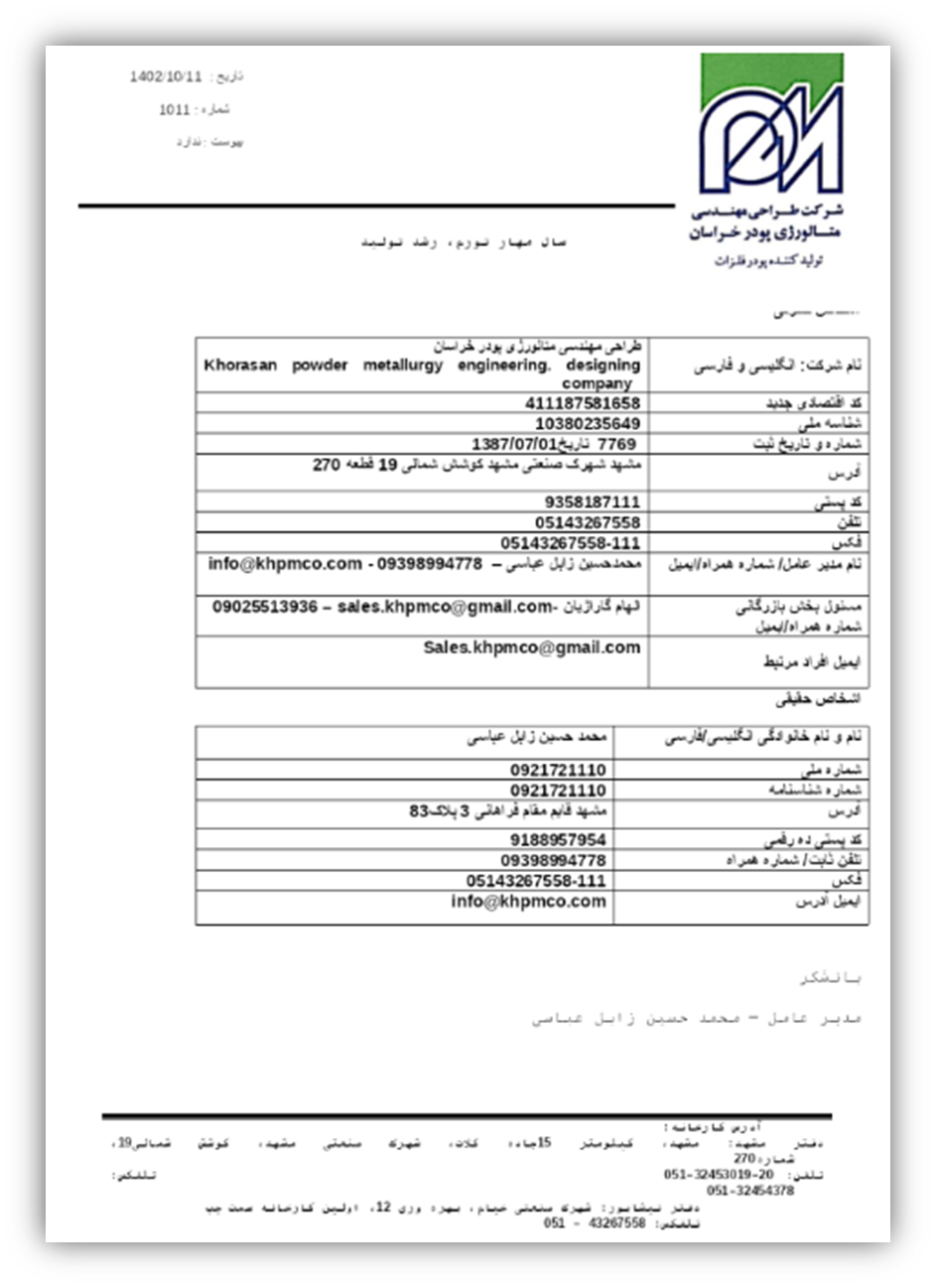
KPMC operates as a privately held limited liability company, predominantly owned and managed by the Zabol Abbasi family. Hossein Zabol Abbasi currently serves as Chairman of the Board of Directors, while his son Mohammed Hossein Zabol Abbasi golds the position of the CEO, while Hossien currently serves as Chairman of the Board of Directors. Additional family members involved in company operations include Minoo Zabool Abbasi and Parsa Zabol Abbasi, as well as Elham Garazhian, who serves as the company’s Sales Manager.
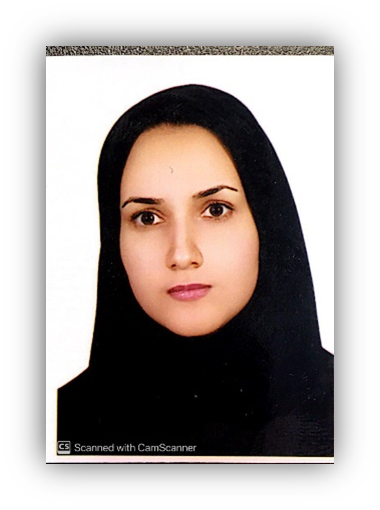

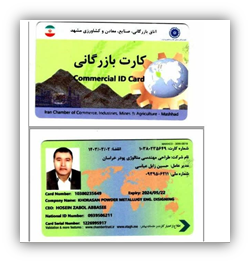
KPMC produces metal powders serving diverse sectors within Iran’s economy. According to the company, its powders are utilized in industries such as paint and coating applications, lightweight concrete and construction materials. The company has pursued international market expansion despite the constraints imposed by Iran’s sanctions environment. Participating in multiple overseas trade exhibitions to reach global markets.
The leaked documents show that KPMC imports some raw materials and equipment necessary for its operations, including atomization equipment parts or specialty chemicals. The company’s demonstrated ability to build atomizers as early as the 1990’s suggests access to either imported technical knowledge or sophisticated reverse engineering capabilities.
Metal powders manufactured by companies such as KPMC carry significant defense implications within the Iranian context. Aluminum powder serves as a critical component in solid rocket fuel, while copper powder is utilized in military-grade explosives, detonators, and armaments.
Despite KPMC’s public presentation of legitimate commercial operations, leaked internal documents reveal that it functions as a main supplier to the Islamic Republic of Iran’s Ministry of Defense and Armed Forces Logistics (MODAFL), rendering it a pivotal component of Iran’s missle development infrastructure.
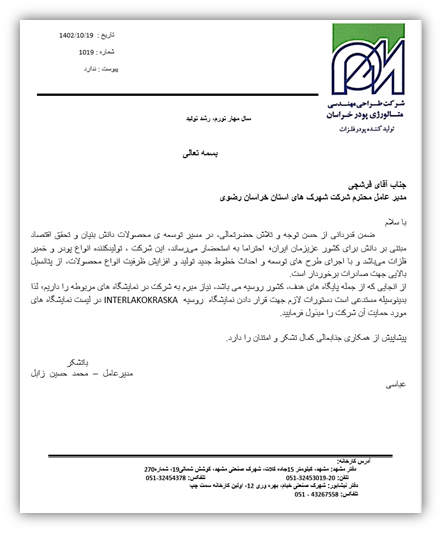
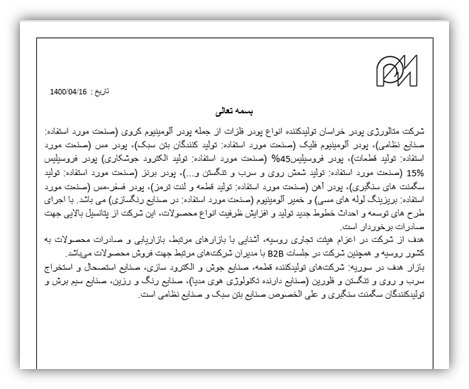
The document above, issued by MODAFL’s Supply Division, provides direct evidence of commercial ties between KPMC and the Iranian security apparatus. The documents record a debt‑settlement transaction between KPMC and a Chinese counterpart, denominated in Chinese Yuan and processed through the Supply Division of MODAFL. The repayment was executed through a series of transactions, as can be seen in the document below. All funds were transferred to Agricultural Bank of China (ABC Bank) for the benefit of an individual named Cao Shanshan. The document bears the signature of sanctioned Iranian national Hojat Abdulahi Fard, the former head of the Finance Department of the Supply Division of MODAFL.
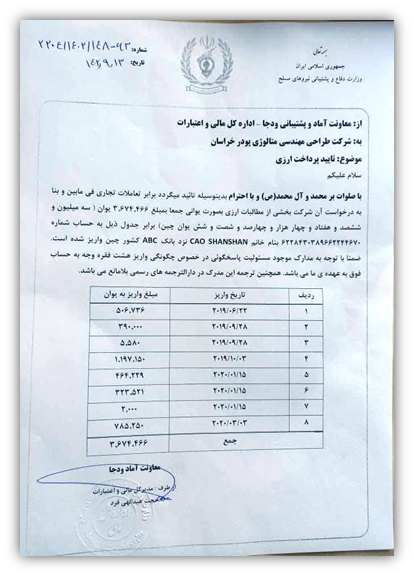
Hojat Abdulahi Fard was sanctioned by the US Treasury in April 2024 as part of the Sahara Thunder network, MODAFL’s main commercial front company, which was previously exposed by WikIran. Fard served as a board member at Sahara Thunder and a representative of Iranian company Etemad Tejarat Misagh, that functions as another MODAFL subsidiary.
Examination of KPMC’s client database reveals relationships with entities directly connected to MODAFL:
-
Haft Tir Industrial Complex in Isfahan - Controlled by Ammunition Industries Group (AMIG) and subordinated to the Defense Industries Organization (DIO). The complex is linked to Iran’s centrifuge program, and has been involved in weapons procurement transactions, and also produces mortar bombs and fuses. Haft Tir was designated by the UN Security Council in 2006 as an entity involved in or supporting Iran’s proliferation-sensitive nuclear activities or development of nuclear weapon delivery systems. Additionally, it has been sanctioned by the governments of Australia, Canada, Japan and the United Kingdom, restricting business and financial transactions with the entity while freezing its assets in those countries. Their facilities were also targeted in the recent regional conflict.
-
Parchin Chemical Industries - a facility specializing in ammunition, explosives, and solid propellants for rockets and missiles. The company operates within the DIO, which is a subsidiary of MODAFL.
-
Iran Aircraft Manufacturing Industries Corporation (HESA) - a company engaged in military and civilian aircraft and unmanned aerial vehicles (UAVs) production. HESA falls under the Iran Aviation Industries Organization (AIO, a state-owned enterprise subordinate to MODAFL.
-
Pars Banaye Sadr – A DIO-affiliated company serving as a key intermediary for procurement of components utilized in missile propellant development. The entity was designated by the US Treasury in 2022.
Further evidence comes in the form of correspondence between KPMC and Pars Banaye Sadr, presenting the company’s product porfolio and their target markets. This email explicitly acknowledges that portions of KPMC’s products serve the military industry:
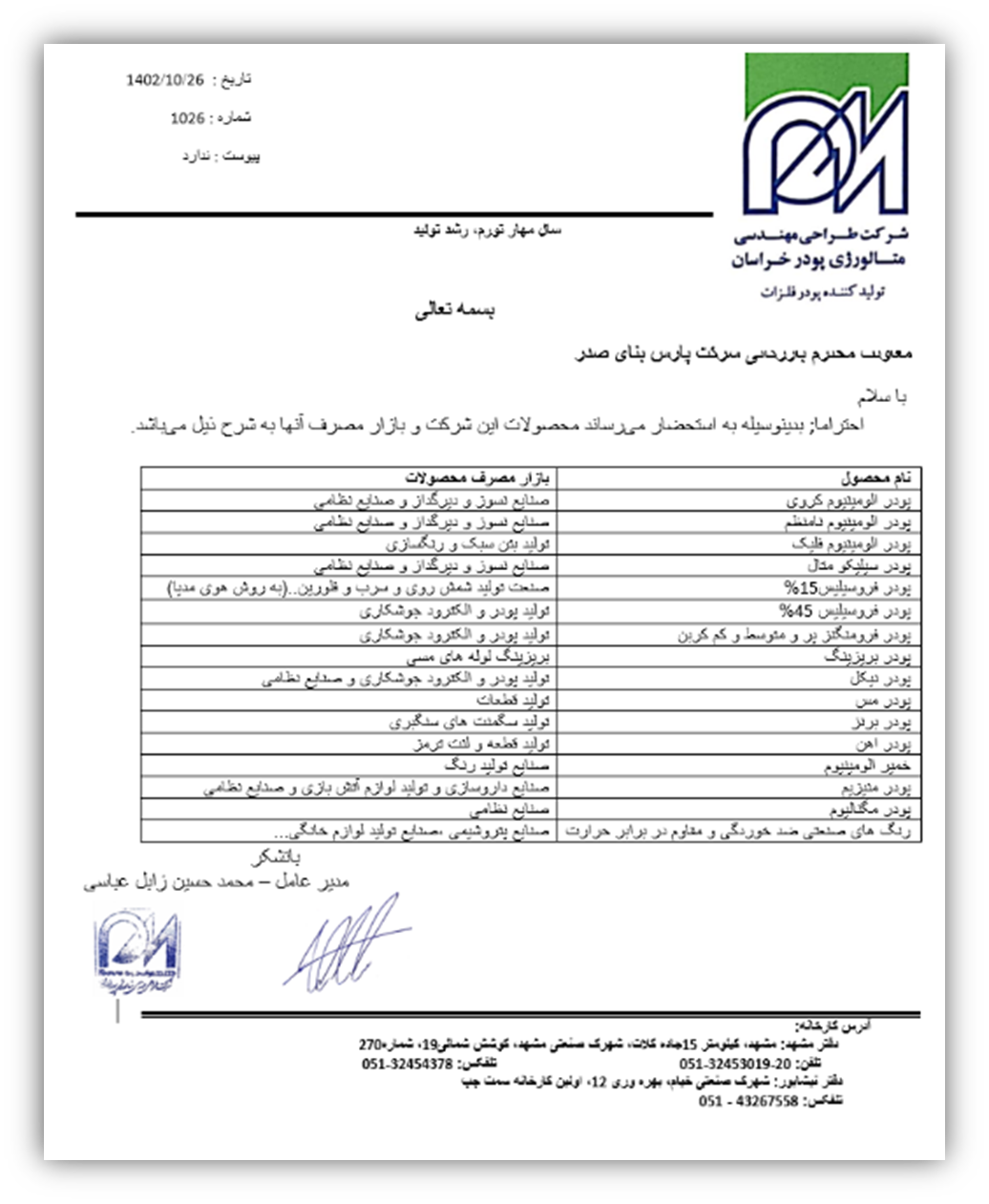 The cumulative evidence establishes KPMC as more than a conventional industrial enterprise. Through documented transactional records with MODAFL's Supply Division and commercial relationships with entities integrated into Iran's missile and defense sectors, KPMC emerges as a critical node connecting legitimate commercial powder metallurgy operations to the Islamic Republic's military-industrial complex. The company's documented role as a primary aluminum powder supplier to MODAFL positions it directly within the supply chain supporting Iran's ballistic missile program.